
What is EFT Infinity Loop?
Emotionally Focused Therapy (EFT) is a therapeutic approach developed in the 1980s by psychologists Susan M. Johnson and Leslie S. Greenberg, built on principles of adult attachment theory. EFT is primarily utilized by adult couples or families looking to improve their relationships.
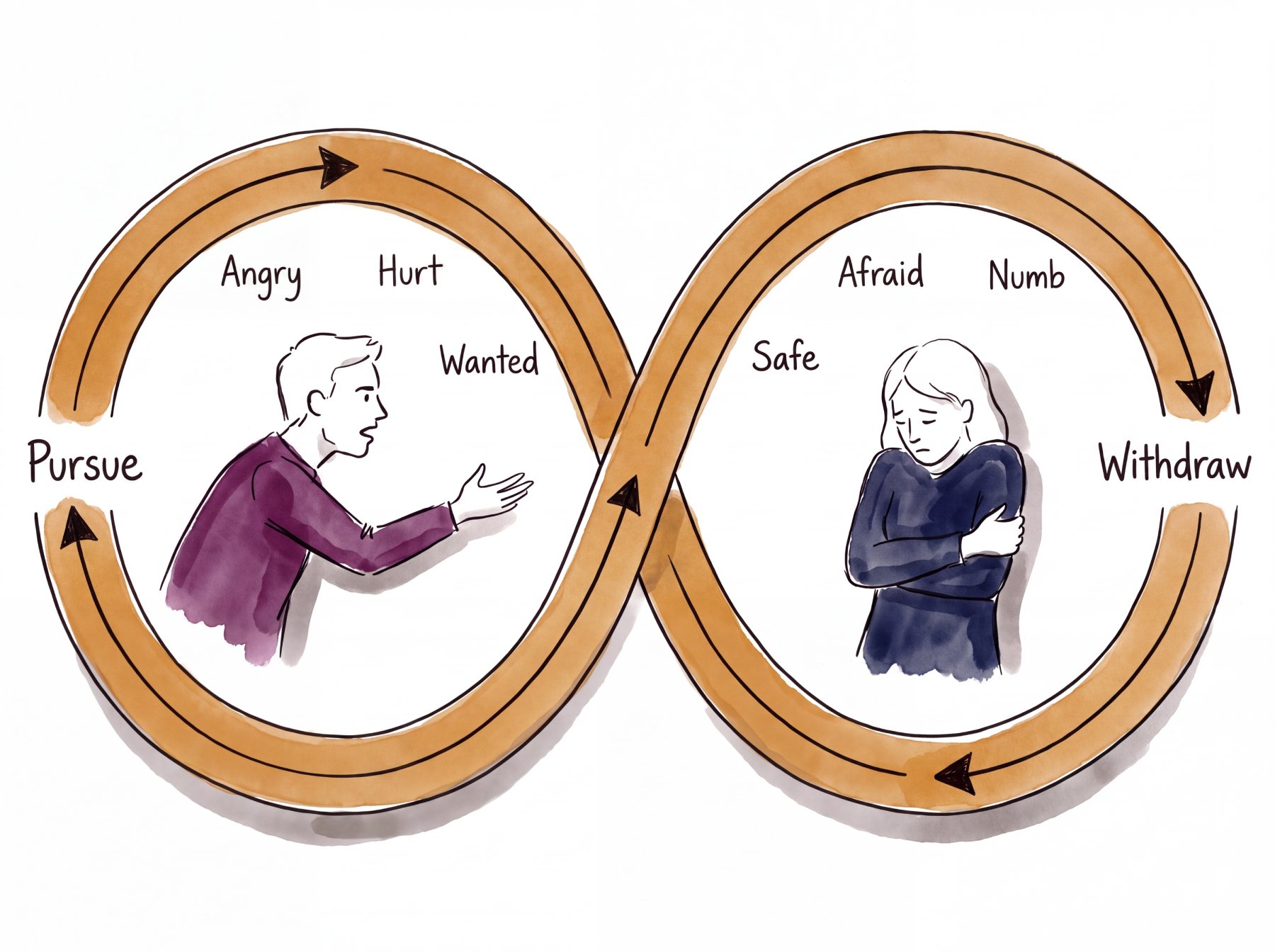
The Infinity Loop was introduced by Scott Woolley, PhD, to help couples identify the negative cycles that they get stuck in—the negative habits that perpetuate dissatisfaction. The worksheet guides each partner through six steps: identifying what they yearn for, naming the primary emotion when that need isn't met, recognizing the protective behaviors that emerge, and reflecting on the thoughts about themselves and their partner that reinforce the cycle. Partners then identify the self-protective action that triggers their partner, perpetuating the loop.
How therapists use it
Introduce the Infinity Loop when a couple recognizes they're caught in a repeating pattern of conflict or disconnection. Have each partner complete the six steps independently, reflecting on their internal experience and outward behaviors. The Infinity Loop is most effective when you share each step with your partner, as it gives your partner a better understanding of what is occurring underneath or from within, and you can learn about how your partner is feeling and what he or she is looking for in the relationship, opening up the communication needed to understand one another better.
Who it's for
EFT views relationship distress as resulting from negative patterns of interaction that couples develop over time, and helps couples step out of negative patterns so that they can help each other establish safety and connection within their relationship. The Infinity Loop suits couples who are motivated to understand their own role in the cycle and willing to share vulnerable feelings with their partner. It works best when both partners can tolerate some discomfort in naming protective behaviors and secondary emotions. It may not suit couples in crisis, those experiencing active intimate partner violence, or those not yet ready to examine their own contribution to conflict patterns.
What clients see
The client reads an explanation of the Infinity Loop concept and then works through six reflection prompts about their deepest emotional need, the primary emotion that arises when that need isn't met, the protective behaviors they employ, and their thoughts about themselves and their partner in those moments. They identify the self-protective action that perpetuates the cycle.
EFT Infinity Loop
Do you ever find yourself stuck in the same frustrating patterns in your relationship? Do the same arguments seem to resurface, no matter how many times you’ve tried to address them? If so, you’re not alone—and you don’t have to stay stuck.…
Modality fit
EFT helps clients identify and transform the negative processing and interaction patterns that create distress. The Infinity Loop operationalizes this by making the negative cycle visible to both partners, allowing them to see how each person's protective response triggers the other's attachment fears, and creating the foundation for the restructuring work that follows in therapy.
Common questions
When should I assign the Infinity Loop?
Assign it when the couple recognizes they're caught in negative patterns of interaction. It works best after the therapist has helped them identify the cycle in session and they're ready to map it more fully. It can also serve as a psychoeducational tool early in treatment to introduce the concept of the negative cycle.
What if one partner completes it and the other refuses?
The Infinity Loop is most powerful when both partners participate, but one partner's completion can still offer value. It may reveal to that partner how their behavior is experienced and create an opening for the reluctant partner to engage. Use their resistance as clinical material about the cycle itself.
How does this fit with EFT's three stages?
EFT typically unfolds over three stages: de-escalation of negative interaction patterns, restructuring these interactions to facilitate open communication of fears, and consolidation of insights gained during therapy. The Infinity Loop supports the de-escalation stage by helping couples see the cycle clearly and understand each other's underlying emotions.
What conditions does EFT address?
EFT is effective in treating individuals, couples, and families, addressing a wide range of issues from marital distress to individual anxiety and trauma. EFT addresses various emotional issues, including fear, anger, and trust, and can be especially beneficial for those dealing with trauma or depression linked to relationship dynamics.