
What is Body Scan - Nervous System Regulation?
A body scan is a structured attention practice where a client moves awareness systematically through the body, region by region, noticing whatever physical sensations are present. The body scan is one of the core techniques in Mindfulness-Based Stress Reduction (MBSR), the eight-week clinical program developed by Jon Kabat-Zinn in the late 1970s at the University of Massachusetts Medical School.
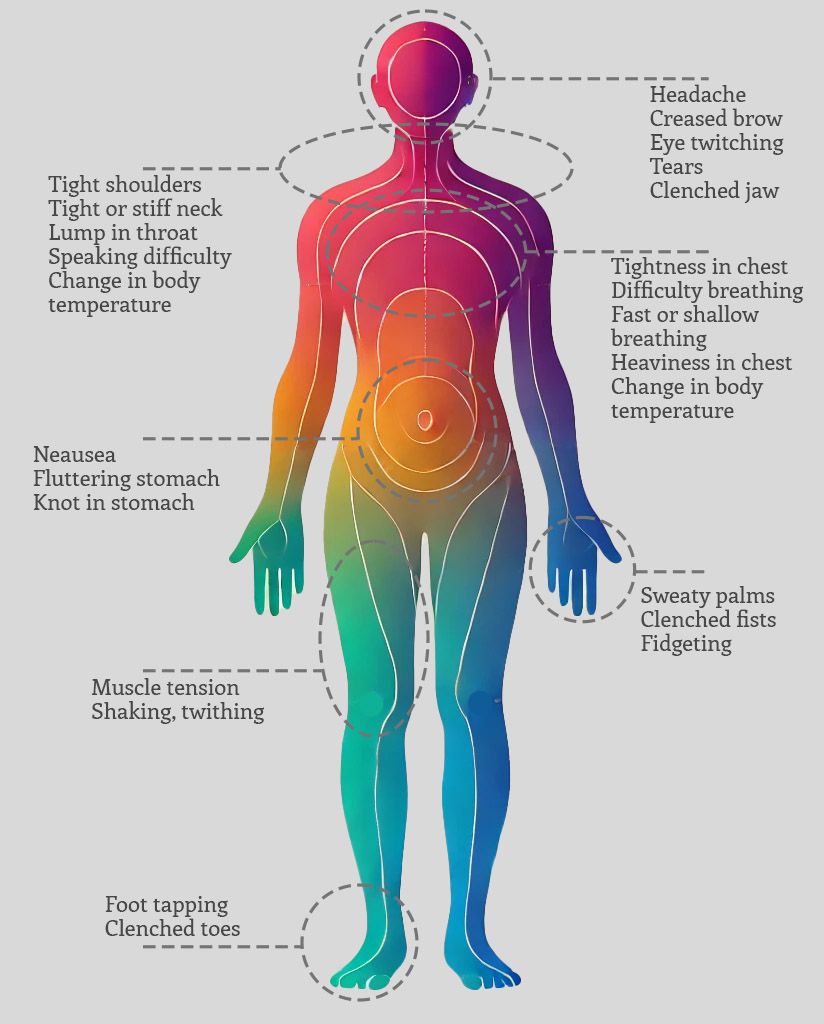
This worksheet contains a diagram showing how emotions are expressed through physical sensations, followed by a guided body scan. The client begins at their feet and moves attention upward through the body, noting sensations without judgment. They then record what they notice in each region.
How therapists use it
Introduce the body scan when a client is ready to build awareness of how their body holds emotion and stress. Explain that the goal is observation, not change—they're learning to notice sensations as they are. After the client completes the scan, review what they noticed. Over time, patterns emerge: anxiety may live in the jaw, sadness in the upper chest, tension in the shoulders. This map becomes useful for emotion regulation later.
For people with severe anxiety, PTSD, or dissociative symptoms, turning attention inward can sometimes feel destabilizing rather than calming, particularly at first. Offer alternatives like focusing outward on sounds or the breath if the client finds sustained interoception difficult.
Who it's for
Mindfulness-based programs that include the body scan show consistent improvements in anxiety and depressive symptoms in both clinical and non-clinical samples. Effects are generally smaller than those of full courses of evidence-based psychotherapy or pharmacotherapy for diagnosable disorders, but they are clinically meaningful for many participants and are durable when practice is maintained.
The activity suits clients with anxiety who are ready to develop body awareness. Severe untreated PTSD or active dissociation—sustained interoception can be destabilizing. Trauma-informed clinical guidance is important. For clients with PTSD, use this worksheet as part of a broader treatment plan, not as a standalone intervention.
What clients see
The client views a diagram of how emotions appear in the body, then performs a guided body scan from feet to head. They note the physical sensations they observe in each region—tension, warmth, numbness, or calm—and record their findings.
Nervous System Dysregulation
How your body experiences emotions with physical sensations Nervous System Dysregulation Regulating your nervous system means helping your body find a sense of calm and balance, even when you’re facing stress. It’s about using techniques th…
What are you feeling in your body?
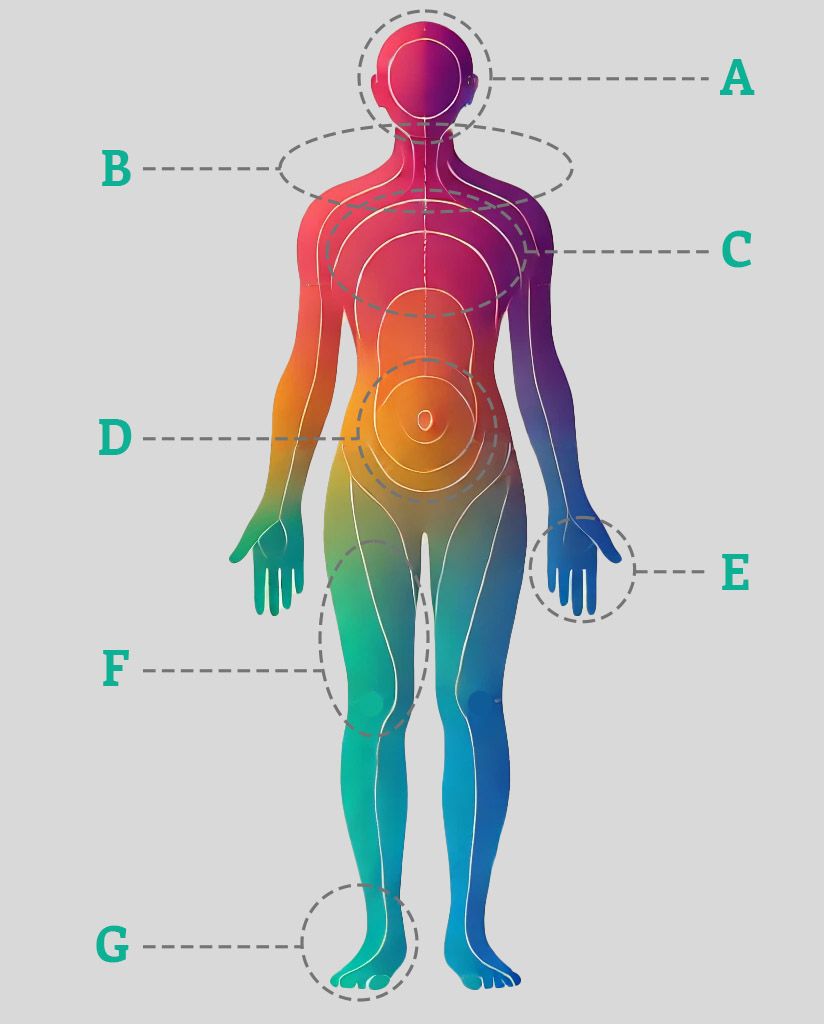
Perform a body scan Scan Your Body for Physical Sensations Begin at your feet and slowly move your attention upward through your body, observing any physical sensations you feel. These sensations might be pleasant, neutral, or uncomfortable…
Common questions
What is interoception and why does it matter?
Interoception is the ability to perceive what's happening inside your own body. Research shows that people with better interoceptive awareness tend to have better emotional regulation, less anxiety, and greater overall well-being.
How does body scan help with anxiety?
Body-scan meditation trains a different kind of body awareness: non-judgmental, curious, observing sensations as sensations, without the amygdala's threat overlay. A 2018 meta-analysis found that body-scan-based interventions significantly reduced anxiety symptoms across clinical and non-clinical populations.
Is body scan safe for clients with trauma?
For people with severe anxiety, PTSD, or dissociative symptoms, turning attention inward can sometimes feel destabilizing rather than calming, particularly at first. Use with caution and offer alternatives like external grounding if the client becomes distressed.
How long does a body scan take?
For emotional awareness, aim for 10-15 minutes minimum to establish interoceptive accuracy. Most practitioners benefit from 20-30 minute sessions to thoroughly scan all body regions and sit with emotions that arise.
What should I do if a client finds the practice difficult?
The client can skip any body area that feels uncomfortable. If focusing inward increases anxiety, switch to looking around the room and naming five neutral things you see.