
What is Passengers on the Bus?
Acceptance and Commitment Therapy (ACT) was developed in the 1980s by psychologist Steven C. Hayes, and is influenced by behaviorism, cognitive psychology, and mindfulness traditions, integrating these elements to enhance psychological flexibility. The 'Passengers on the Bus' is a comprehensive metaphor that brings together all the component processes of Acceptance & Commitment Therapy (ACT).
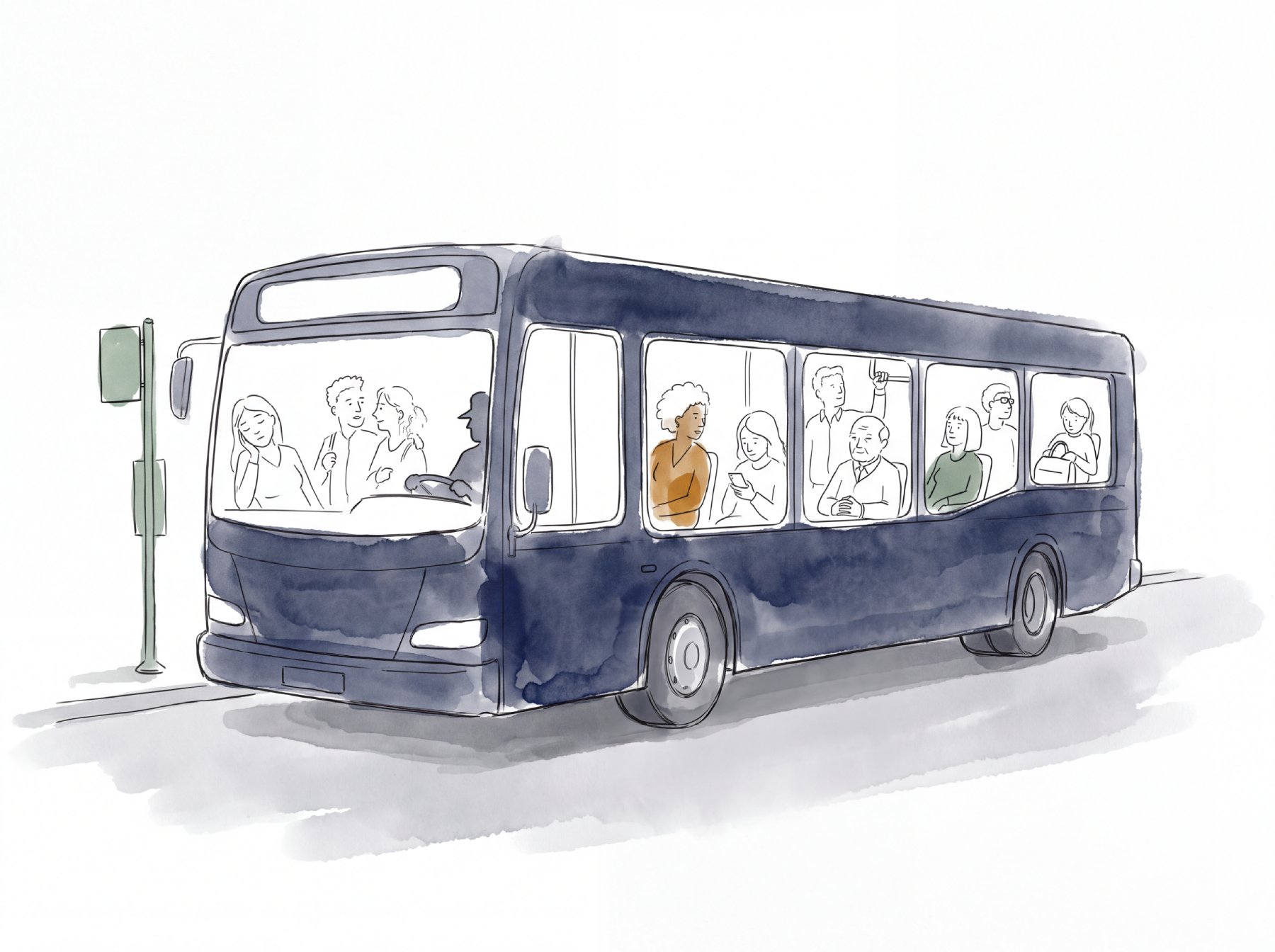
The activity presents the core metaphor in four pages. The client reads the scenario: they are the driver of a bus heading toward a chosen destination, but the bus carries difficult passengers—loud, critical, or frightening thoughts, feelings, memories, and urges. The passengers demand the driver stop, turn around, or change course. The client learns that they cannot remove these passengers, but they also do not have to follow their demands. Instead, they can acknowledge the passengers and keep driving toward what matters.
How therapists use it
Introduce this activity when a client struggles with difficult thoughts or feelings that feel commanding or threatening. The client completes the worksheet between sessions, identifying their own difficult passengers and the direction they want to drive their life. In the next session, explore what the client discovered about their relationship to these internal experiences. Discuss which passengers showed up most, whether the client felt able to keep driving despite them, and what values or goals represent their chosen destination. Use their responses to build toward committed action aligned with their values.
Who it's for
ACT has been widely applied to anxiety, depression, trauma, and chronic pain. For anxiety, cognitive defusion can reduce the intensity of anxious thoughts by allowing a person to observe them without being entangled, and for depression, it helps break the cycle of negative thoughts and self-criticism. This activity suits clients who are caught between their internal experiences and their values—those who feel controlled by thoughts or emotions and need to learn that they can move forward despite them. It works well for adults with anxiety or depression who are ready to shift their relationship with difficult internal states rather than trying to eliminate them. It may be less suitable for clients in acute crisis, those with active psychosis, or those not yet ready to consider values-based action.
What clients see
The client reads the metaphor and reflects on their own difficult passengers—the thoughts, feelings, memories, and urges that feel commanding. They identify their chosen destination, the direction their life would go if they were not controlled by these passengers. They consider what it would take to keep driving toward that destination even when the passengers protest.
Your Bus
Imagine you're driving a bus. You know where you want to go. But the bus has passengers — and some of them are difficult. They're loud, critical, frightening, or demanding. They tell you to stop, turn around, take a different route. They th…
Your Passengers
Choosing to Keep Driving
Reflection
Modality fit
Cognitive defusion is one of ACT's six core processes, and through cognitive defusion, therapists help clients loosen the grip of unhelpful thinking patterns so they can respond more intentionally instead of reacting automatically, supporting psychological flexibility by allowing people to notice thoughts without being dominated by them. The passengers metaphor teaches this defusion directly by externalizing thoughts and feelings as separate entities the client observes rather than identifies with.
Mentalizing refers to the ability to attend to mental states in ourselves and in others as we attempt to understand our own actions and those of others on the basis of intentional mental states, and if we are mentalizing successfully, we are able to understand what is going on in our own minds and in the minds of other people. The passengers exercise invites the client to observe and name the mental states present on the bus, developing awareness of internal experience as a step toward understanding and managing it.
Common questions
Is this activity suitable for clients with severe anxiety or panic?
Passengers on the Bus can help clients with anxiety by teaching them to observe anxious thoughts without being controlled by them. However, if a client is in acute panic or crisis, stabilization and grounding may need to come first. Use this activity once the client has some capacity to reflect on their experience.
What if a client says they cannot identify their values or chosen destination?
This is common, especially in depression. Use the worksheet as an opening to explore what small things matter to the client—connection, creativity, health, learning—rather than demanding a grand life purpose. Values clarification often unfolds over time and across multiple sessions.
How does this differ from thought-stopping or thought-challenging?
CBT engages content—evidence, distortions, balanced alternatives—aiming for a more accurate thought, while defusion does not enter the content debate; the thought can stay as it is and changes your relationship to the thought—its grip, its felt truth, its behavioral pull.
Can this activity be used with clients who have trauma?
ACT has been widely applied to anxiety, depression, trauma, and chronic pain. For trauma survivors, the metaphor can help them recognize that traumatic memories and related emotions are passengers they carry but do not have to obey. Ensure the client has adequate stabilization and safety before using this activity.
What should I do if the client identifies a passenger they want to remove?
This is an opportunity to explore the ACT principle of acceptance. Discuss what happens when they try to remove the passenger—does it work, or does the struggle consume energy? Help them see that acceptance and committed action toward values is often more effective than fighting internal experiences.